
Autumnal break ideas
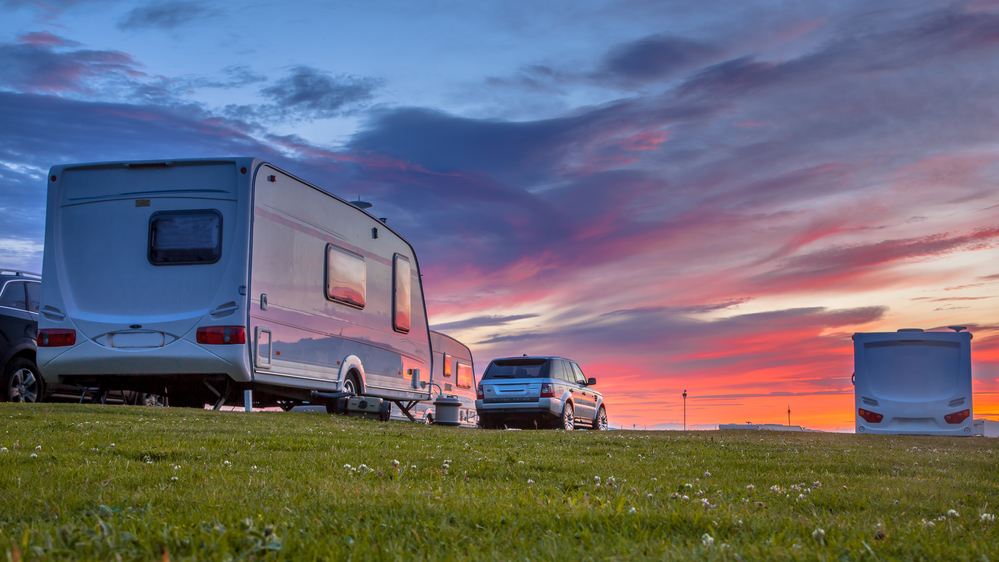
‘Tis the season of mists and mellow fruitfulness – the perfect time of the year for leisurely autumnal walks, soak up the amazing changing colours of our woodlands and forests, or visit a seasonal fair.
Here are just some of our suggestions for hitching up the caravan and making the most of this splendid, final burst of colour before resigning ourselves to the sombre greys of wintertime;
Sheffield Park, East Sussex
- the crisp chill in the air sharpens the azure blue skies that shape the background to a vivid palette of colours that light up the fiery display of the National Trust’s extensive parkland at Sheffield Park;
North York Moors National Park
- if you prefer your nature on a broader and altogether more rugged canvas, the North York Moors National Park in autumn is ideal for a weekend – or longer – break. Pull on your hiking boots and get a taste of England at its most naturally wild;
The Isles of Scilly
- but Autumn can also be a whole lot more relaxing and calming, suggests Country Living, if you venture just offshore to the gently exotic Scilly Isles – they’re rarely on many visitors’ itineraries and this time of year the walking on any of these unspoilt islands will offer chances to see the seal pups basking on the glorious beaches or spot the migrating flocks of birds;
Autumn Show & International Horse Trials
- September sees the Autumn Show & International Horse Trials organised by the South of England Agricultural Society at their showground in Ardingly, West Sussex – it’s an extravaganza of displays, countryside sports, and “have a go” activities to tempt you into participating;
Ludlow Food Festival
- why not round off a visit to the beautiful Welsh Marches by dropping into one of the best-known festivals in the foodie calendar – the Ludlow Food Festival is also held in September when some 180 vendors and exhibitors show off all manner of hot and cold local produce, against the majestic backdrop of Ludlow Castle;
Three counties harvest festival
- Autumn is the time for harvest festivals, of course, and the Malvern Autumn Show at the Three Counties Showground claims to be the biggest of them all – “ginormous” is the description adopted by the organisers of this outpouring of regional food and drink, gardening tips and lectures by celebrity gardeners;
Pick up a pumpkin
- the children will be the first to remind you that autumn also spells Halloween – and at Cannon Hall Farm, just 5 miles west of Barnsley in West Yorkshire, your all-day ticket to this working farm – with its Highland cattle, alpaca, and pygmy goats – includes a free pumpkin for every child in a special autumn pumpkin festival;
Cosy at Chatsworth
- Autumn is a time when you might just want to get cosy – and where better to do that than the grand and luxurious country mansion that is Chatsworth House in Derbyshire’s Peak District, where you can snuggle down in one of the estate’s snug cottages.
The British countryside enters one of its most colourful and exuberant times of the year in the autumn. There are plenty of things likely to encourage you to get out and about – yet you’ll look all the more forward to settling down before the fire and afternoon tea once you’re done. Hitch up your caravan and discover just how an autumnal break will be so worthwhile.
Belle Vue Site Review
Date of Visit: July 2022
Overall View
This is a 5-pitch, members only, Certified Location located about 10 minutes’ drive from the City of Chester. Please see arrival video HERE.
It is a small, basic but fully functioning CL, whose main attractions are its proximity to Chester and ease of access.
Please note, site fees are payable in cash only and, being a CL you must be a member of the Caravan & Motorhome Club to stay.
Facilities
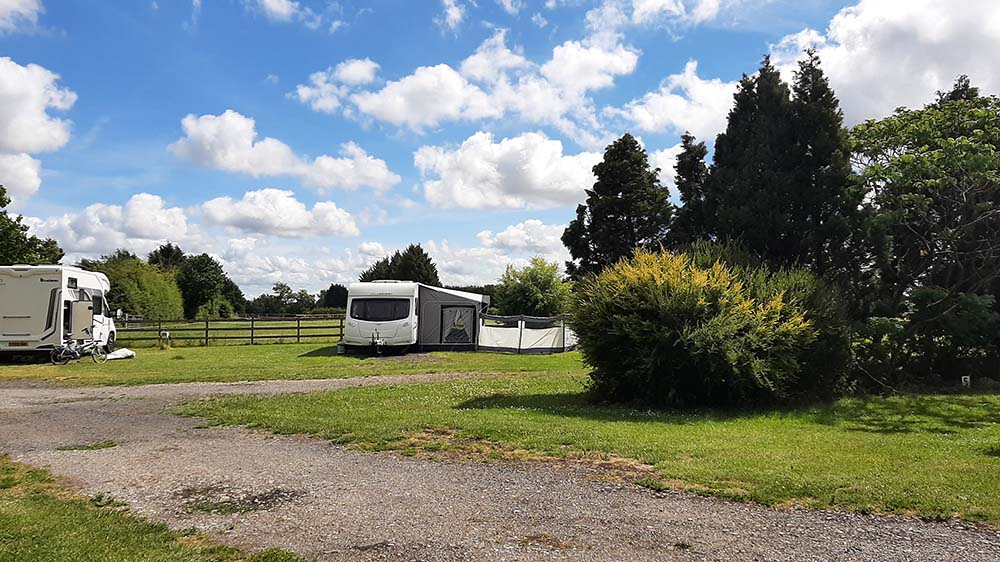
It is situated to the side of Belle Vue Farm in one level grass field. EHU points are available, and a water tap and refuse disposal and recycling point is at the entrance to the field. There is an exclusive use WC and wash hand basin room in the farmyard and the chemical disposal point is opposite there.
Awnings are permitted and during our two stays, we observed several caravans and motorhomes making use of this facility.
There is no site WiFi, however, EE gave a very strong signal and Three was good too. The coverage maps for both Vodafone and O2 reported suggested similar coverage although none currently offers 5G.
TV signal was not tested during these visits; however, it is fully expected, again due to its proximity to a big city, that there would not be a problem.
The field entrance is not secured and is away from the main house.
Review of Site Pitch
Pitches are well spaced out, level, of a generous size and are fully grass. The site is well used but at no time did we feel hemmed in.
The proximity of water and refuse disposal was helpful, however, the toilet and disposal point are a little further way and access could be muddy if wet.
As stated in the Club Handbook, there is some road noise due to nearby main roads. We did not find this intrusive, and it did not keep us awake.
Around and about
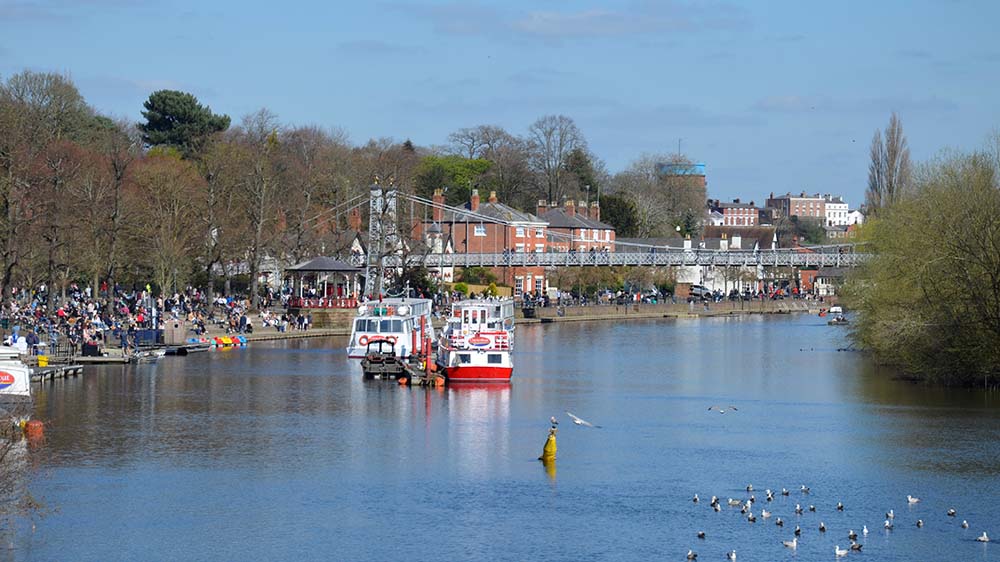
This site is very conveniently located close to the Roman/Medieval city of Chester with his famous Shopping Rows and Roman walls enclosing the city centre. As a result, there is a very wide range of activities suitable for all ages and interests. www.visitcheshire.com
The site is near to the A55/M53 & M56. This provides opportunity to access further afield activities with ease. The Cheshire Oaks Outlet Village is 10 minutes’ drive from the site. https://www.mcarthurglen.com/en/outlets/uk/designer-outlet-cheshire-oaks/ Liverpool and all it offers is a further half an hour away. www.visitliverpool.com Bus services to Liverpool can be caught from the Outlet Village or from the Zoo Park and Ride.
The world-famous Chester Zoo is about 10 minutes from the site and offers a strongly recommended Park and Ride service for visiting the City of Chester. www.chesterzoo.org
A child friendly fun and energetic attraction is the ‘Crocky Trail’ – about 20 minutes from the site. www.crockytrail.co.uk
Nearest Railway Station is Chester, about a 10 minute drive away, with good mainline links.
A very pleasant, dog friendly, farm café is about 15 minutes’ drive from the CL. It serves a good range of snacks and light meals plus the usual cakes, tea, coffee and soft drinks. www.meadowleacoffeeshop.com It has car parking to the front and is very popular with cyclists due to the closeness to start of the Chester Greenway – a disused railway line which runs all the way to Shotton in North Wales but can be a car free walking or cycling route into the city of Chester. https://www.sustrans.org.uk/find-a-route-on-the-national-cycle-network/millennium-greenway
There is a small shop and PO in the village of Guilden Sutton about a five-minute car drive away. It stocks the basics and there is ample free parking. https://www.postoffice.co.uk/branch-finder/3286142/guilden-sutton
There are several petrol stations near the site but the nearest supermarket one is Sainsbury’s in Great Boughton, about 10 minutes from the site and this is also the nearest supermarket.
There are a couple of pubs close by, Bird In Hand, www.thebirdsinhandguildrensutton.co.uk in Guilden Sutton village itself and the Piper Inn across the A41 https://ourlocal.pub/pubs/piper-chester/. Both serve food but please check in advance as opening hours do change.
Bus services are available on the A51, about 1.5 miles from the site. No pavement is available between the site and the A51. It should also be noted that services are not that frequent.
There are several National Trust properties within half an hour drive of the site, Speke Hall, Tatton Park, Dunham Massey.
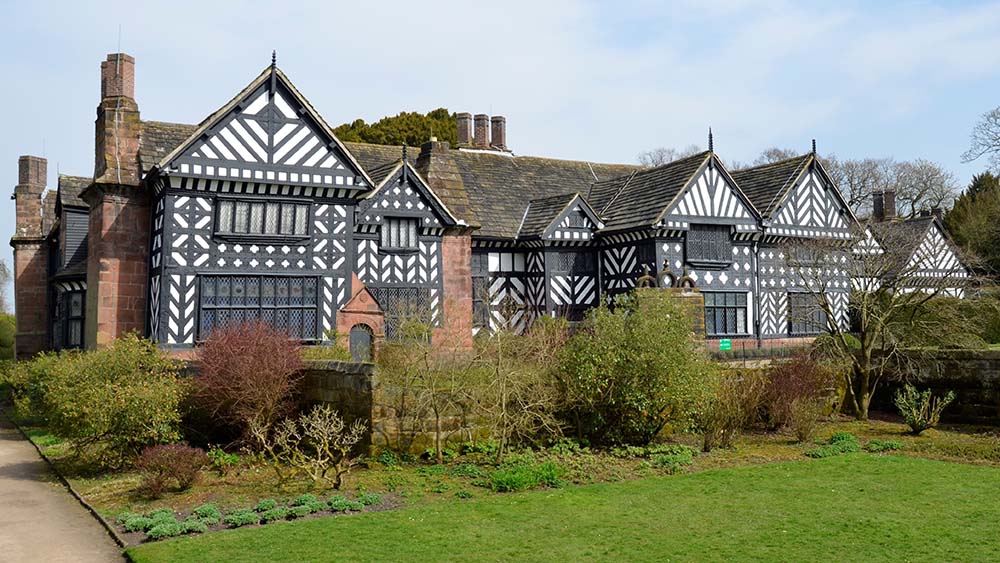
Over the border into Wales, about an hour from the site is Erddig Hall and Chirk Castle. www.nationaltrust.org
This CL is also extremely popular for overnight stays as people break their journeys. In that respect it scores very highly.
Summary
This is a popular little CL which provides all the basic amenities you need. The site fees reflect this and if you are looking for a sound and inexpensive base from which to explore the area – then this is for you.
Your static home: what you need to know
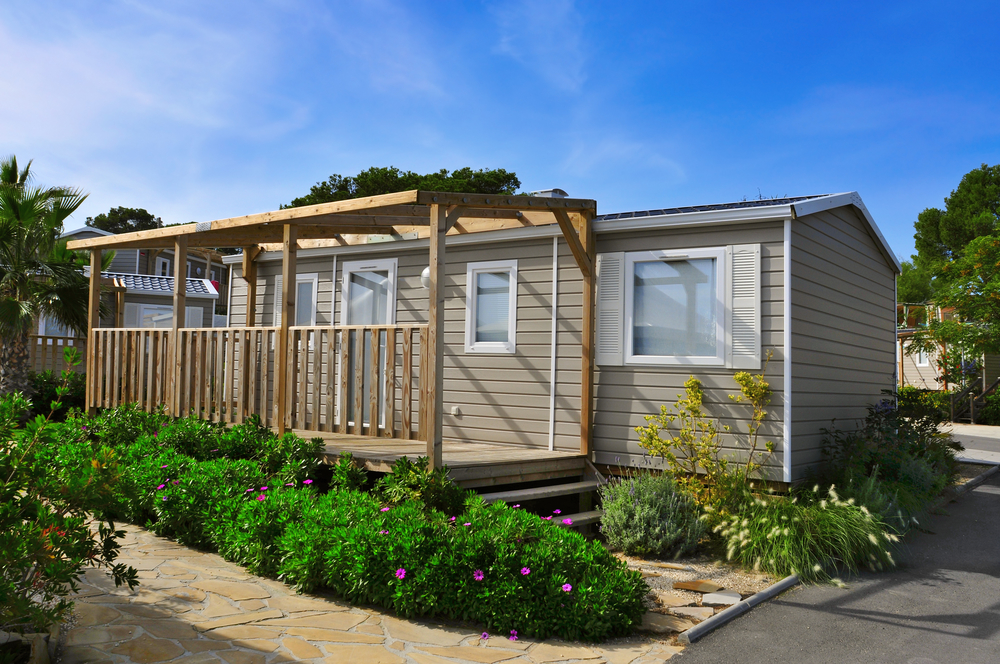
With the long summer days of scorching heat we’ve had in the summer of 2022, it’s difficult to imagine that it will soon be winter and the end of another season for your holiday home. As the seasons change, it may be helpful to review aspects of the relationship between you and your caravan park managers and owners.
At the same time, let’s also review some other issues concerning the use of your static home as winter approaches.
Can I live permanently in my static caravan?
This is probably the single most frequently asked question that is put to us about static homes or holiday caravans – and, more often than not, the answer is likely to be no.
Typically, the choice is entirely out of your hands, and you will need to investigate the situation carefully because:
- the local authority licence the caravan park owners are required to hold may be for seasonal, recreational use only and prohibit residence the whole year round;
- a paper submitted to the House of Commons Library makes clear the distinction between “residential mobile homes” – in which the owner can live all year-round and static caravans intended for holiday use only;
- to comply with the terms of the licence they have been granted, therefore, the site owners may prohibit permanent residence; and
- your static caravan insurance is most unlikely to provide cover for its use as your main home and permanent place of residence.
Is insurance a legal requirement for static caravan ownership?
There may be no formal legal requirement for such insurance – although some form of cover may be necessary if you took a loan for the purchase of your caravan.
Your site owner may also demand that you have a minimum level of insurance cover to ensure your indemnity against – and ability to meet – claims from other users of the site who might have suffered an injury and sustained other financial loss for which you are held liable as the caravan owner.
In most cases, the site management does not have the right to insist that you purchase such insurance from them – so, that means you can shop around for the most suitable static home insurance deal.
Can I let out my caravan during the holiday season to obtain income?
The question raises several important issues:
- depending upon your site agreement (covering the lease of your pitch), you might need the site owner’s permission before letting out your holiday home;
- in some cases, the local authority’s licence may not have authorised the site for holiday letting use but only for that of owners;
- if you have existing static insurance, you may need to discuss your plans with your insurance provider and possibly upgrade your cover, as letting your caravan out may invalidate any existing policy if it is aimed exclusively at owner-users;
- if you have purchased your caravan using a loan, some lenders may require that you obtain their permission before letting your caravan out as a commercial activity; and
- remember that the law may oblige you to declare any income obtained as part of your tax liabilities.
Holiday park site owners and their responsibilities in times of bad weather
With winter storms and severe weather seeming to be the ‘norm’ over the last few years, it’s not just caravan and park homeowners who feel the effects, but even people living in bricks and mortar homes – no structure is safe from extreme weather.
So, what can you do if your caravan becomes waterlogged, flooded, or snowed in? Here we look at your site owner’s obligations and yours:
Duty of access and safety
- various pieces of legislation place a park site owner under a legal obligation to maintain safe and reasonable access to various areas around their site – this may put them under the obligation to clear snow, mud or water from roads and paths leading to individual caravans and the site’s facilities and amenities;
- at the same time, though, you may also have the responsibility to keep your pitch clear and safe – the extent of those responsibilities will be set out in more detail both in your lease agreement with the site owners and the conditions set out in your static caravan insurance documents;
- of course, the law cannot specify in advance every conceivable circumstance that might arise and therefore definitive answers about what is or is not reasonable can’t always be given in advance;
Discussion before escalation
- so, what happens if you have concerns about the current state of your site – if severe weather has resulted in problems accessing your site or your pitch, bearing in mind that the site owners may be trying to deal with numerous problems all at the same time;
- practically, it may be difficult or impossible for them to progress every owner’s concerns simultaneously in such exceptional circumstances and they may need to prioritise;
- try to understand their priorities and approach, and be patient – so, if you suspect that your patience is being abused and, in fact, they’re sitting on their hands, then speaking to them politely is always the preferable first step, bearing in mind that sometimes inaction arises as a result of an honest oversight or misunderstanding and a friendly word is all that’s required;
- if that still results in nothing but inertia and in the meantime, you are unable to safely access your caravan, then you may need to write a formal letter or note confirming the situation and setting out exactly what it is you need to be able to do;
- make clear, politely, in your letter that you believe the current position means that they are in breach of prevailing legislation demanding that safe access is provided – that might well do the trick, but if it doesn’t, you may need to take legal advice and consider further action.
How do I keep my static home condensation-free?
Condensation can become a big problem in static homes. It can occur at any time, but it is often more of a problem later in the year as the nights become cooler.
Not only can it be unsightly and unpleasant, but it can also lead to problems like damp and mould. Damp can damage your interior and your furnishings, and mould spores can cause health problems, especially for people who suffer from health issues like asthma.
Although problems with condensation can be frustrating, by following a few simple tips you can reduce the likelihood of any problems occurring – keeping your static home drier and more comfortable.
Here are some tips and suggestions for keeping condensation at bay:
Make sure you ventilate properly
- condensation forms mainly because of a lack of ventilation;
- to improve ventilation, make sure you let the air circulate by opening the windows – in warmer weather, of course, you can leave the windows open throughout the day and night provided you pay attention to security and close them again when you go out;
Improve the insulation
- if your static home does not have good ventilation, you might try to prevent draughts by blocking up the ventilation points – this is not a good idea and may only serve to make the problem worse;
- instead, work try ways of keeping the interior warmer by installing better insulation and even double-glazing the windows – that way you won’t be tempted to block any air vents and you’ll improve the overall ventilation;
Heat your caravan slowly
- the steps you take to heat your static caravan can also affect the extent of any condensation;
- have you noticed how often people come in from outside and immediately switch on the heating to its highest setting – this may not be the best option;
- it will prove more efficient if you keep the heating on a low setting for longer – that will not only maintain a comfortable ambient temperature but also encourage the warmth to penetrate the cupboards and furniture to keep them dry too;
Use extractor fans
- extractor fans are often used in kitchens and bathrooms because that’s where the atmosphere is likely to hold the most moisture – so, you might want to think about buying and installing some extractor fans;
- use the extractor fans when you are in the shower or using the kitchen and leave them running for a while after you’ve finished – you may also want to open the windows to increase the ventilation further;
Dry clothes outside
- it might be tempting, but if you dry the washing inside your static home you’ll quickly add a lot of moisture to the air – avoid doing so whenever you can and if you have no option but to dry the washing inside at least open as many windows as possible;
Invest in a dehumidifier
- a dehumidifier is a simple and cost-effective way to cut down on humidity in your static home – add one or two in your caravan and you will help to reduce condensation;
Do not block air vents
- air vents should be kept clear at all times, on no account should they be blocked in your attempts to keep warm, since they allow gases and moisture to escape;
- blocking them can be highly dangerous and can trigger carbon monoxide poisoning – which may be fatal.
Do I need a TV licence for my static caravan?
Finally, the vexed question of whether you need a TV licence for your static caravan – the answer may be trickier than you imagined and requires a little explanation.
The key question is whether or not you will be using any television installed in your static caravan at the same time that your normal television is being used in your permanent home. If the answer to that is no, then you may not need a separate licence for your caravan.
The TV Licensing website explains how you may submit a “non-simultaneous use declaration” which has been specifically designed for users of televisions in static caravans.
If you are likely to be using a TV in your caravan while someone at your normal place of residence is also using the TV there – you have teenage children who have stayed at home while you are on holiday, for instance – then you will need a separate licence for your caravan.
UK Mini Break Ideas
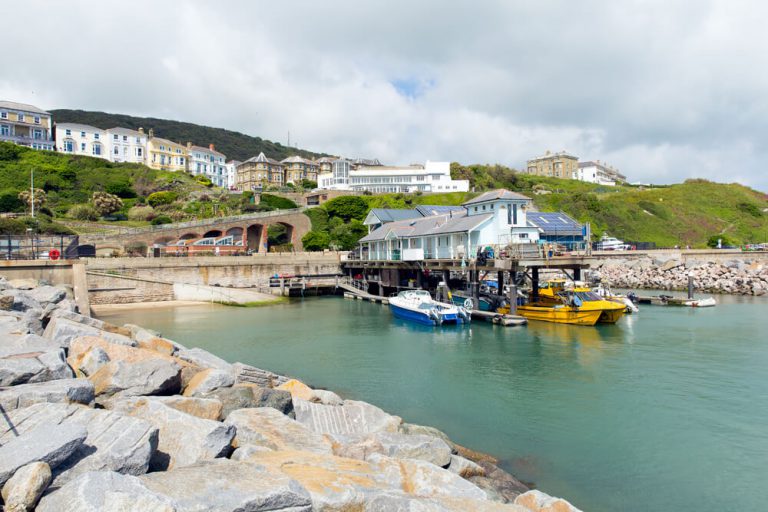
A touring caravan or motorhome gives you the freedom of the open road – and thanks to the beautiful and vibrant diversity of the British Isles, those open roads are perfect for weekend getaways and mini-breaks.
So, whether you head for the countryside or prefer a city break, when you have your accommodation already arranged, that well-earned holiday is not going to break the bank.
We hope the following short break ideas will whet your appetite in your quest to find the perfect destination.
- North Wales
This is one of the most scenic and beautiful parts of the British Isles where a wild coastline gives way to inland areas that offer amazingly historic towns and cities. It has a long history and association with Celtic culture, of course, as well as later industries and activities such as slate mining. Why not pick up a few words of Welsh before you go? The locals will appreciate it.
- The Lake District
Many people tend to associate wild countryside with Wales and Scotland but in fact, England also has vast areas of semi-wilderness – and that’s no more apparent than in the Lake District. Locations such as Windermere are world-famous for their beauty and well worth exploring for a few days – or longer.
- Northumbria
Including the great cathedral city of Durham, Northumberland is one of England’s hidden gems comprising beautiful countryside and some truly spectacular coastline such as that around Bamburgh Castle.
- Norwich and East Anglia
Many a happy caravanner will be familiar with locations in East Anglia such as the Norfolk broads and its expansive coastal areas. But the city of Norwich is ancient and picturesque. It is sometimes missed by holidaymakers rushing to get to the rural areas and that is a pity because it is well worth a visit and a wonderful place for a city break.
- Portsmouth and Hampshire
Portsmouth and Hampshire are great for short breaks. Portsmouth is a city that is often overlooked as somewhere worth visiting in its own right simply because it is a ferry port. People tend to regard it as the gateway to France or the Channel Islands and not always as the fascinating town for a visit that it actually is. There are some great coastal and harbour views, interesting fortifications and several historic maritime venues including the final resting place of HMS Victory.
- Stratford-Upon-Avon
Along with such iconic towns in the heart of England such as Warwick, Kenilworth, and Royal Leamington Spa, these are fantastic historic locations with some lovely countryside as well. The nearby River Avon is great for water-based leisure activities. As a destination, being in the Midlands, they’re also easily weekend-reachable from just about all areas of England and Wales. There are some really good sites nearby but as always – book your weekend away early.
- Herefordshire and Shropshire
These are perhaps two of England’s least-known counties among tourists – and that’s such a pity because they have some lovely countryside. The towns are also charming and full of historic interest. In Herefordshire, try Leominster, Eardisland (buildings dating back to 1300) and of course Hereford itself. In Shropshire, don’t miss Oswestry for its timbered buildings, Much Wenlock (arguably where the first modern Olympic games were held) and Shrewsbury for its lovely river, buildings, and culture.
- Leicestershire and Rutland
Drift lazily along in Leicestershire and Rutland on your mini break. This is all about farming, rivers, fresh produce, and historic towns. Oakham is the county town of Rutland and charming to visit with its stone buildings. Nearby Melton Mowbray was the original birthplace of the iconic pork pie – and they’re still claimed to be the best in the world. Stamford is close-by (though in neighbouring Lincolnshire) and that too is well worth a visit. Belvoir Castle is also famous, and the huge Rutland Water reservoir is a must if you’re into bird and nature watching.
- Peak District
Take a back-to-nature break and see rugged life in the Peak District National Park. This is some of the hilliest and wildest country outside of Wales and Scotland. It covers parts of Derbyshire, Yorkshire, Cheshire, and Staffordshire. This is a weekend that’ll be associated with days full of trekking and nature watching in the hills. You’ll be able to escape the crowds and take in some amazing natural beauty.
- Cambridge and the Fens
Sample the big skies of Cambridge and the Fens. Now it’s true that the scenery might not be awe-inspiring in terms of hills and valleys, but the peaceful vastness, openness, and huge skies of the Fens have inspired poets and painters for centuries. There are some great villages, thatched cottages, and marvellous pubs too. For something a little livelier – and with inspiring architecture – try the world-famous city of Cambridge, which in August is likely to be quieter due to the reduced numbers of students there.
- Scottish borders
Many visitors simply drive quickly through the Scottish Borders in order to get to Edinburgh, Glasgow, and the Highlands beyond. Yet the borders themselves are beautiful and wild with some charming towns to explore such as Selkirk, Kelso, Hawick, and Jedburgh. Yes, this area – like much of Scotland, Northern England, and Wales – does get a lot of rain but if you’re prepared that should not stop you from having a great mini break.
- Loch Ness
Just about everyone will have heard about Loch Ness and its mythical monster. Whether you believe it exists or not this is still an amazing location to visit. The loch itself is around 20 miles long and descends to the murky depths of 700 feet at its deepest. It forms part of the Caledonian Canal which runs from Inverness to Fort William and is a must if you appreciate breathtaking scenery and the atmospheric and impressive Urquhart Castle.
So, if you are stuck for ideas about where to travel on a mini-break or a weekend away in your ‘van, we hope the ideas above will give you some inspiration for destinations.
Of course, before setting off on any journey it only makes sense to be sure that your touring caravan insurance continues to be up to date and effective. If you have any doubts on that particular score, here at Cover4Caravans we will be only too pleased to offer you our advice and guidance.
Further reading – check out some of our trip, short break, and destination ideas in our companion guides:
- Caravanners’ Guide to Foodie Holidays
- UK foodie holidays for caravanners – part 2
- Guide to caravanning in France
- Guide to caravanning in Germany
- Guide to caravanning in the Channel Islands
- Caravanning for Adrenaline Junkies
- Complete caravanners’ guide to mainland Europe
- Caravanning for History Buffs
- Caravanners’ guide to theme parks in and around the UK
- Caravanning for Adults
- Coastal campsites for Caravanners – where to go and where to pitch up
Energy-saving tips for caravanners
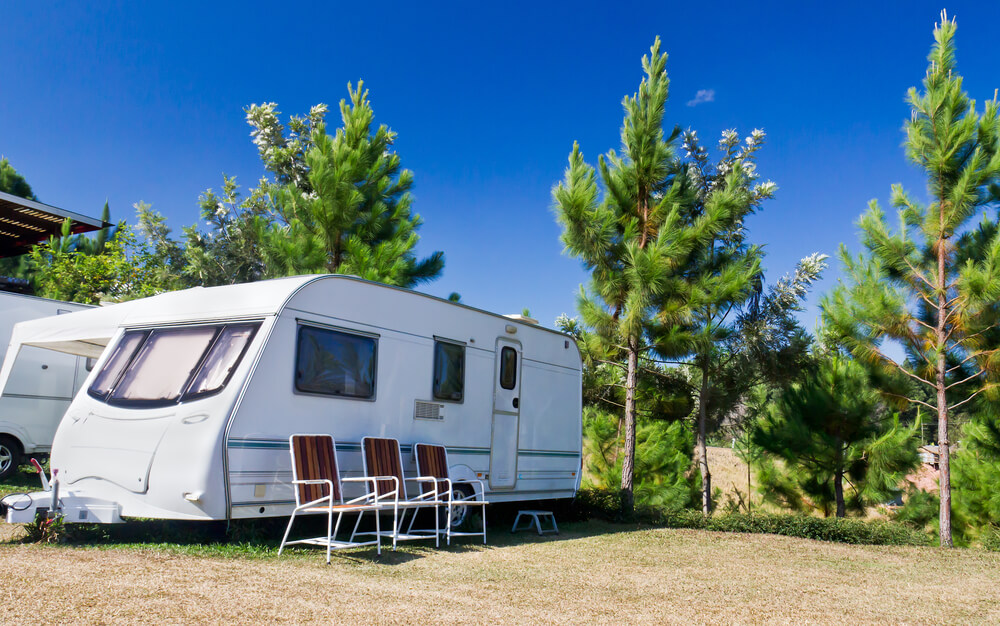
Though it’s probably for others to decide whether climate change has yet reached emergency proportions, most of us want to do our best to conserve energy – and know that we’re also saving money into the bargain.
Never people to be left behind when it comes to the latest trends and developments, caravanners too can play their part in saving energy while still indulging the comforts and outdoor leisure of their favourite pastime.
Elsewhere we have discussed the eco-friendliness, sustainability, and environmental protection you can achieve while indulging your enthusiasm for caravanning. To partner that discussion, here are a few more energy-saving tips:
Wind turbines
- you’ve seen those giant blades slowly rotating on some hilltop wind farm or out to sea, but had you imagined that the very same principles can also power your caravan needs;
- Browse the EcoPowerShop for the latest micro wind turbines and Greenspec for a detailed discussion on every aspect of small turbines.
- these “small” or “micro” wind turbines are eminently portable, can be set up in minutes, and yet are also designed to withstand the blusteriest conditions;
- hook it up to the battery charger onboard your caravan and you immediately make savings on the cost of fuel, save more on the campsite’s electric hook-up fees, and know that you are helping to keep your caravan’s battery in tiptop condition;
Solar panels
- also borrowing from commercial applications, scaled-down versions of the solar panels you might have on your roof at home offer an alternative source of power for charging your caravan’s onboard battery;
- the Caravan and Motorhome Club has published a useful guide to solar power for caravanners and stresses the value of solar panels as an alternative – or supplement – to your electric hook-up;
- solar panels that are designed for use by caravanners and campers can be chosen according to their generating power – in a typical range from 4W up to 150W, remembering that you’ll need at least 40W of power to keep your onboard battery topped up;
- as an alternative to either solar panels or wind turbines, though, you might also want to save on the electricity stored in your battery by using simple stick-on LED lights to illuminate night-time trips to the bathroom, within wardrobes or above the kitchen sink – browse the wide range available at Amazon UK;
Gas consumption
- those cylinders of liquid gas you always need to carry onboard your caravan have a lot of work to do – you might be using gas for space heating, hot water and even to power the fridge;
- it’s probably overdoing things, therefore, also to use a gas barbeque, so save some of your precious bottled gas by simply switching to a charcoal-fired barbeque – and discover that it’s undoubtedly more fun too;
- as far as hot water is concerned, it’s worth keeping the onboard tank always topped up, rather than running water in from the outside supply – the heat already inside your caravan is going to help keep the water in the tank already a little bit warm, so the gas doesn’t need to heat a tank of cold water;
Save water with a power shower head
- of course – in the winter months in particular – you’ll want to take advantage of the nice warm shower your caravan is likely to offer but might also worry about the cost of heating all that hot water;
- if you install a power shower head – hand-held ones are available too – you increase the water pressure and, so, feel the need to use less of it;
- some manufacturers claim that an ionic power shower head may increase water pressure up to 200 times and reduce the volume of water needed for showering by 30% – and the power shower heads made by Ecocamel are specifically designed with caravans and motorhomes in mind.
Energy-saving in your caravan – it saves you money while also helping you to play your part in helping to protect the environment.