Static homes have long offered a simple escape from the pressures of everyday life, and their popularity shows little sign of fading. If anything, the pandemic years – when both overseas and domestic travel were restricted – only reinforced their appeal.
Why people love static caravans
The draw of static caravans seems only to have grown over the years. For many owners, they offer a simple and comforting way to step back from everyday pressures and enjoy a change of pace whenever needed. Their popularity isn’t hard to understand once you look at the reasons behind the trend.
A ready-made escape
A static caravan provides an immediate bolt-hole. There is no need to plan complicated trips or face airport queues. Owners can arrive, switch off and enjoy a few days of calm whenever the mood strikes. For many, that sense of spontaneity is one of the biggest attractions.
Affordable compared with traditional holiday homes
While traditional second homes can be costly to buy and maintain, static homes are often far more accessible. A well-designed, modern unit can offer all the comforts you need at a fraction of the price of a bricks-and-mortar property. This affordability has opened the door for more people to enjoy a personal retreat.
Modern designs that feel like home
Static caravans have evolved significantly. Many now feature high-quality materials, efficient heating, open-plan layouts and attractive interiors. For owners, this means enjoying a comfortable, stylish space without the formality or upkeep demands of a conventional house.
Lower running costs
Because static caravans tend to be well insulated and use modern materials, their heating and energy costs are often relatively low. Owners may find that weekend breaks or longer stays cost much less than traditional holiday accommodation.
The pull of nature and tranquillity
Many sites are set in rural or coastal surroundings, allowing owners to reconnect with the outdoors. Whether it’s woodland, countryside or seaside views, the setting is part of the experience. This shift into quieter, more restorative environments is a major reason people keep coming back.
A sense of community
Holiday parks often have a warm, welcoming feel. Over time, many owners get to know their neighbours and form lasting friendships. This sense of belonging -combined with the shared enjoyment of the setting – can be a significant benefit.
Flexibility
Static caravans allow you to enjoy breaks throughout the year, within the limits of the site’s seasonal licence. Whether it’s a long summer holiday or a quick off-season weekend, you can tailor your visits to your lifestyle.
A simpler way to unwind
Above all, people love static caravans because they represent a simpler escape. There is no pressure to do anything in particular; the freedom is in the ability to step away from routine, enjoy the quiet, and recharge.
What is a static home?
Just in case you’re unfamiliar with the term, static homes usually come under one of two general appearance categories:
- caravan-like dwellings that while they might be technically towable, are really designed to sit permanently on a pitch;
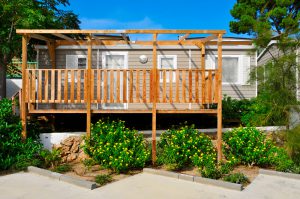
- rather more cabin-like prefabricated structures, sometimes built of timber, that likewise sit on a pitch permanently. These typically can’t be towed but they could be craned-up and transported if absolutely necessary.
It’s important at the outset to differentiate between a static caravan home and what’s called a “park home”.
Occupancy rules for static caravans
Typically, a static caravan home is used for a few weeks or months in the year for recreational breaks. For many owners, it is that welcome bolt-hole where you can step away from everyday life and enjoy a quieter, more tranquil pace whenever the mood takes you.
Unlike park homes, static caravans sit on a site that typically isn’t licenced for permanent all-year-round occupation. That’s because most holiday parks operate under a seasonal site licence rather than a residential one. These licences come with clear conditions set by the local authority, the most significant being that the park must close for a defined period each year. In practice, this usually means anywhere from four to eight weeks where no one is permitted to stay on-site.
Why the closure period exists
These rules help ensure holiday sites remain places for leisure and short stays rather than becoming informal full-time housing. Local authorities manage land use carefully, and seasonal licensing keeps holiday parks distinct from residential communities. The closure period also gives the site owner time to carry out maintenance, safety checks and general repairs that would be difficult if people lived there year-round.
What this means for static home owners
For owners, the result is that a static caravan cannot typically be occupied for 365 days a year. Even if you’d like to spend more time there, the licensing rules mean it remains a seasonal property. That also affects how the home is insured. Because static caravans are classed as holiday homes, insurers base their cover on the assumption that the unit will be unoccupied for periods throughout the year. As a result, policy conditions, exclusions and inspection requirements are shaped around those expected gaps.
Why static caravans cannot be used as permanent homes
This is why a static caravan can’t typically be used as your permanent residence. It doesn’t fall under the same planning or licensing framework as a park home, which is designed for all-year occupation. A static home remains just that – a holiday property. Somewhere to relax, unwind and enjoy a different pace of life, but not an address for full-time living.
Points to note
While static caravans are popular, there are some points to note too:
- unlike many conventional properties, a static home’s value will depreciate over time and you may also be obliged by the site owner to replace the static home after a certain amount of years;
- as with any major purchase, it’s very important to get independent legal advice before signing your purchase contract – taking into account the site issues as well as the static itself. This is essential to protect your interests in various areas including service charges, site maintenance obligations, duration of your right to occupy your pitch and so on;
- your site agreement may restrict certain activities – perhaps including whether or not (or how often) you can offer overnight stays to younger children. These sorts of measures are usually related to preserving the site’s tranquillity;
- you may not be allowed to rent out your property to others or only do so with the site owner’s explicit permission as well as your insurance provider’s permission.
Summary
For most people, these are modest concerns and easily dealt with.
Owning a static home just might be a way of regularly dropping out from the stresses and strains of modern conventional living. That’s perhaps the main reason driving this growth in interest.
Further reading: